
An online form builder in Cambodia should do more than collect names and email addresses. It should help your team complete a defined job, such as receiving a hotel booking enquiry, registering an event, screening an NGO applicant, collecting school applications or qualifying a business lead. This guide helps Cambodian businesses and organisations choose a suitable tool, adapt forms for Khmer and English audiences, and measure whether the form is producing useful action. Written by: Renee
Start with the decision your form must support
Do not begin by comparing software features. Begin by writing the decision that follows each submission.
For example:
- A hotel decides whether a guest enquiry should go to reservations, events or long-stay sales.
- An NGO decides whether an application is complete and which programme team should review it.
- A school decides whether a parent wants an enquiry, a campus visit or an application pack.
- A retailer decides whether a customer needs a product recommendation, delivery support or a quotation.
- A consultancy decides whether a business enquiry is suitable for a call, proposal or referral.
This decision determines the fields, routing, language, follow-up and reporting you need. A form that collects information without creating a clear next action may simply create another spreadsheet for staff to manage.
Which Cambodian organisations should investigate form-builder software?
An online form is worth investigating when staff currently copy information from email, social media messages, paper sheets or spreadsheets into another system. It may also help when different teams ask the same questions repeatedly.
Good candidates include:
- Hotels and tourism businesses: booking enquiries, airport-transfer requests, group reservations, feedback and event proposals.
- Schools and training providers: admissions enquiries, open-day registration, scholarship applications and parent feedback.
- NGOs and development organisations: volunteer applications, beneficiary intake, partner enquiries, event registration and donor enquiries.
- Retailers and service companies: quotation requests, product enquiries, complaints, warranty requests and delivery details.
- Exporters and manufacturers: distributor applications, product specifications, purchase enquiries and international buyer qualification.
- Professional firms: consultation requests, project briefs and document collection.
The strongest reason to test a form is not that another company uses one. It is that your organisation can identify a repeated question, a measurable response and a person responsible for follow-up.
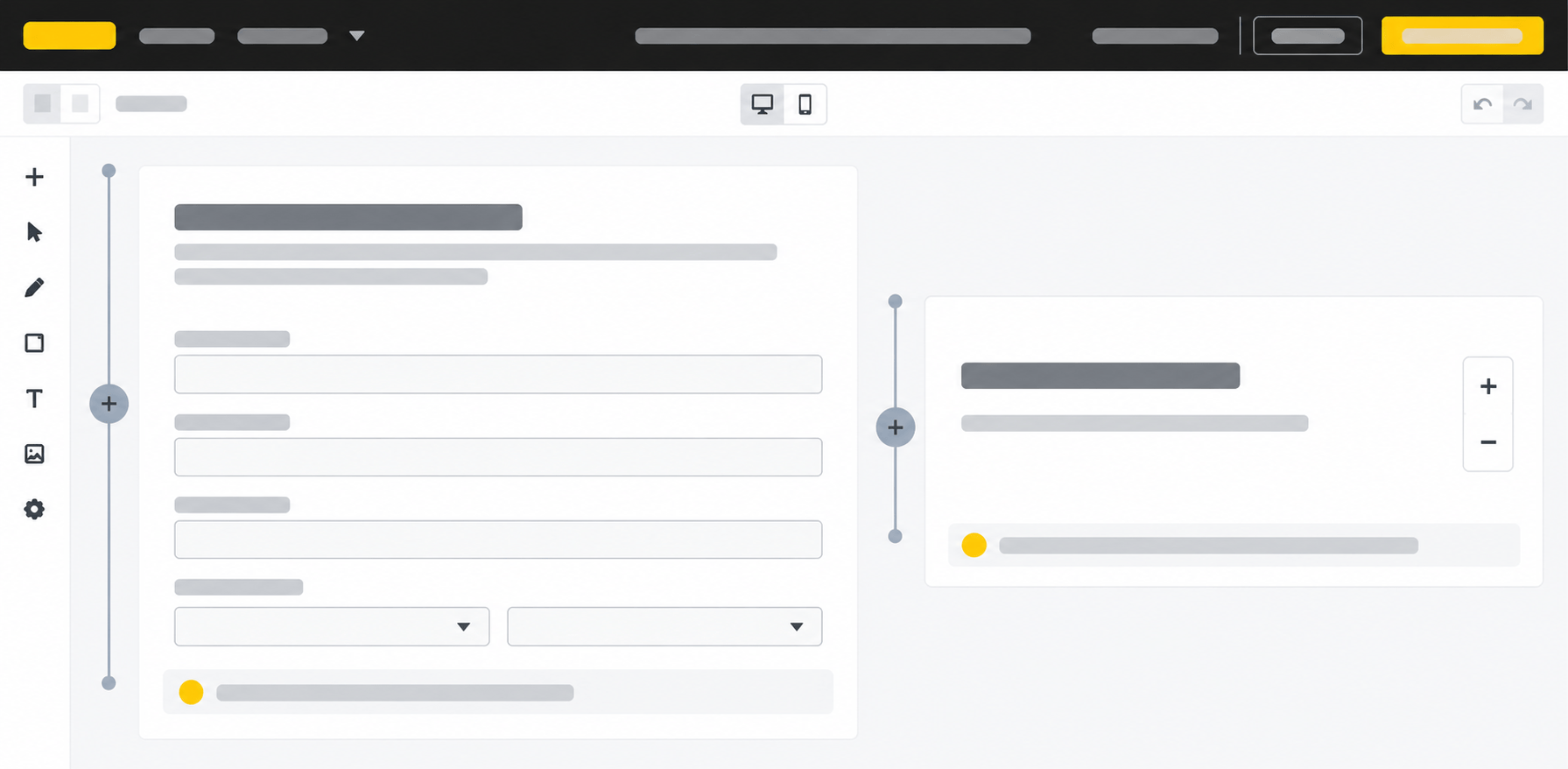
Compare form builders by workflow, not by the longest feature list
Form builders vary considerably. The comparison published by HubSpot describes tools ranging from simple survey products to platforms with conditional logic, CRM connections, payments, signatures, workflow automation and reporting. Use that comparison as background research, but verify current features, limits, pricing and data terms directly with each supplier before buying.
For a Cambodian organisation, assess each option against these six questions:
- Where will submissions go? Can the information reach the inbox, spreadsheet, CRM, helpdesk or project system your team already uses?
- Who owns the next action? Can the submission be assigned to reservations, admissions, programme staff, sales or customer service?
- Can the form work in Khmer and English? Check labels, error messages, confirmation text, dropdown options, date formats and exported data. Do not assume that an interface being available in English means the public-facing form supports good Khmer content.
- Can the form show different questions? Conditional logic may reduce irrelevant questions. For example, an NGO volunteer form could ask for safeguarding or availability details only when relevant.
- Can you report useful outcomes? Submission totals alone are not enough. Look for completion, incomplete submissions, source, response time, qualified enquiries and completed actions.
- What happens to sensitive information? Review access permissions, retention, exports, account security and the supplier’s data-processing terms before collecting identity documents, financial information, health information or safeguarding records.
Tools such as Google Forms may suit basic surveys, registrations and internal collection. Products such as Jotform, Typeform, SurveyMonkey and Formstack offer different combinations of design, logic, integrations, reporting and workflow features. A platform is not automatically suitable because it is well known. Test it against your own process.
A practical selection framework for Cambodian teams
| If your main need is | Prioritise | Test before choosing |
|---|---|---|
| Simple internal survey or meeting registration | Low cost, simple sharing and spreadsheet export | Can staff create, distribute and analyse it without technical help? |
| Hotel or school enquiries | Mobile usability, bilingual text, notifications and routing | Can an enquiry reach the correct team and receive a clear confirmation? |
| NGO applications or programme intake | Permissions, conditional questions, file handling and audit controls | Can authorised staff review submissions without exposing unnecessary information? |
| Sales or consultation leads | CRM connection, source tracking, qualification and follow-up | Can the team identify qualified enquiries and record the next step? |
| International buyers, investors or donors | Clear English copy, reliable notifications and structured exports | Can overseas users understand the questions and receive a professional response? |
This framework prevents a common mistake: selecting a visually attractive tool that cannot support the organisation’s internal handover.
Design separate experiences for local, foreign and international audiences
A single form can serve several audiences, but it should not force every respondent through the same questions.
Local Cambodian customers
Use Khmer where it makes the request easier to understand. Include familiar contact options only when your team can respond through them. If staff need a phone number, explain why. If location matters, use Cambodian provinces or service areas that match the way your team operates. Test the form with people who are not involved in building it, because internal staff may understand unclear wording that customers do not.
Foreign residents and tourists
Provide concise English instructions and explain practical details such as dates, arrival times, room or service preferences, transport requirements and preferred contact method. A tourist may need a short booking enquiry, while a foreign resident may need a longer service or membership form. Do not request information that the team will not use.
International buyers, investors and donors
Use professional English, state what happens after submission and include the organisation’s legal or operational contact details where appropriate. Ask for organisation name, country, project or purchasing interest and timeframe only if those fields support qualification. An international audience may judge the clarity of the process before deciding whether to continue, so test confirmation emails and response ownership carefully.
Use conditional logic carefully in Khmer and English forms
Conditional logic changes the next question based on an earlier answer. It can shorten an application, but poor branching can hide important information or create inconsistent records.
Before publishing, map the form on paper:
- Question 1 identifies the request type.
- Question 2 asks only the details needed for that request.
- Required questions are limited to information needed for the next action.
- Every route ends with a confirmation and an internal owner.
- Khmer and English versions use the same meaning, options and reporting categories.
For example, a Cambodian school could ask whether the visitor wants admissions, fees or transport information. Each choice could then show a different set of questions. The school should still record the original enquiry type in a consistent field so monthly reporting remains reliable.
Make the website and confirmation message do useful work
Your website is a business-controlled source where your organisation can present its services, contact details, policies and evidence clearly. It is not automatically trustworthy or verified simply because a form appears on it. The form should therefore explain why information is requested, how it will be used and what the respondent should expect next.
After submission, provide:
- A confirmation message in the same language as the form.
- A realistic response timeframe, if your organisation can maintain it.
- A reference number or copy of the submitted information when useful.
- A clear alternative contact route for urgent matters.
- An internal notification that identifies the responsible person or team.
For a hotel, the confirmation might direct the enquiry to reservations. For an NGO, it may explain that submission does not guarantee acceptance. For a school, it may link to the next admissions step. The wording must match the real process, not an ideal process that staff cannot deliver.

Run a small Cambodia-specific test before committing
Global software comparisons can describe available functions, but they cannot establish whether a particular form will work for your Cambodian customers, staff or beneficiaries. Test the workflow with your own audience and records.
A useful pilot can take one existing process, such as a hotel group enquiry, NGO volunteer application or school open-day registration. Keep the test narrow enough to review manually.
- Record the current baseline: count enquiries, completed submissions, missing information, staff handling time and completed outcomes for an agreed period.
- Build one focused form: create Khmer, English or bilingual versions according to the audience, not according to assumption.
- Test on real devices: check mobile screens, slow connections, Khmer text, keyboard behaviour, file uploads and confirmation messages.
- Assign ownership: name the person who checks submissions and record the expected response time.
- Tag the source: distinguish website, email, QR code, event, referral or other source where this supports a decision.
- Review results: compare completed submissions, useful submissions, response time, qualified enquiries and completed actions with the baseline.
Do not judge the pilot only by the number of submissions. A shorter form may produce more submissions but less usable information. A longer form may produce fewer submissions but save staff time if the completed records are more complete.
Measure the outcome that matters to your organisation
Choose one primary outcome and two or three supporting measures.
- Hotels: qualified booking enquiries, quotation requests, response time and confirmed bookings.
- Schools: completed admissions enquiries, campus visits booked, applications started and applications completed.
- NGOs: eligible applications, complete records, review time and referrals to the correct programme.
- Retailers: product enquiries, quote requests, resolved support cases and completed orders.
- Professional firms: suitable consultations, proposal opportunities, response time and accepted projects.
Useful calculations include:
- Completion rate: completed submissions divided by form starts.
- Qualification rate: suitable enquiries divided by completed submissions.
- Action rate: completed bookings, applications, meetings or cases divided by suitable enquiries.
- Response-time compliance: submissions answered within your stated timeframe divided by total submissions.
Review these measures by language, audience type and source where your form captures that information lawfully and fairly. This can show whether a Khmer version, an English version or a particular enquiry route needs improvement, without assuming that one audience behaves the same as another.
Online form builder checklist for a final decision
- Is the business or programme objective written down?
- Does every field support a decision, service or reporting need?
- Can the form be used comfortably on a mobile phone?
- Have Khmer and English labels, options and error messages been checked by suitable reviewers?
- Does each submission reach the correct internal owner?
- Can the tool export or connect data without creating duplicate work?
- Are permissions and retention appropriate for the information collected?
- Can the organisation measure completed actions, not only submissions?
- Has the form been tested with Cambodian users or respondents relevant to the organisation?
- Is there a clear review date for improving the form?
The right online form builder for a Cambodian organisation is the one that supports a real workflow, communicates clearly with the intended audience and produces data your team can act on. Start with one repeated process, test it in Khmer and English where needed, assign ownership and measure the action after submission.


